
NSW doesn’t have a planning problem, it has a delivery problem
NSW is often described as having a planning problem. The system is too complex, too slow and too hard to navigate. Those frustrations are real, and planning reform has an important role to play in improving how decisions are made. But from where we sit, that diagnosis misses a critical part of the story.
The planning system generally does what it is designed to do. It tests proposals, manages competing interests and reaches a decision about whether development should proceed. The more difficult question is what happens after that decision is made, and whether the conditions required for delivery are actually in place.
As the planning system continues to be reshaped, reformed and fast tracked, many of the issues preventing project completion remain unresolved. In some cases, reform has helped more projects move through the system. In others, it has pushed more complex delivery issues into conditions of consent, post approval requirements or project level risk. That creates a growing pipeline of projects that may be approved, or capable of approval, without necessarily being deliverable. These questions are becoming more prominent because the context in which renewable energy projects are being delivered is changing. Across regional New South Wales, communities are often engaging with multiple renewable energy projects at the same time, alongside major transmission infrastructure and broader economic change. Rather than assessing individual projects in isolation, many communities are considering what the cumulative effect of development means for their region and whether the benefits being offered are proportionate to the scale of change they are experiencing.
That distinction matters. NSW is moving into a more constrained delivery environment, shaped by land constraints, construction costs, financing costs, infrastructure dependencies, servicing requirements and market feasibility. In that context, the test is not simply whether a project can be approved. It is whether it can move from approval to commencement, and from commencement to completion.
Beyond approval
Much of the public debate assumes that the primary constraint on growth is the planning system itself. While approvals can be complex and time consuming, the factors that ultimately determine whether projects proceed are often found further along the project lifecycle.
By the time a project reaches approval, it has often absorbed significant risk, cost escalation and compromise. Approval may confirm that a proposal is acceptable in planning terms, but it does not always resolve the practical issues that determine whether it can be built. Increasingly, those issues are being delegated into conditions, agency requirements, planning agreements or later stages of design and delivery.
That approach can be appropriate where the remaining issues are genuinely capable of being resolved by the proponent. The problem arises when conditions are asked to carry matters that sit beyond the control of a single project. Infrastructure sequencing, utility capacity, regional transport impacts, construction logistics, workforce accommodation, biodiversity pathways, waste management and cumulative community impacts are often shared issues. They are shaped by multiple projects, multiple agencies and decisions made well before an individual consent is issued.
When those matters are left to be resolved project by project, the system creates duplication, inefficiency and cost. The same issues are solved repeatedly, in slightly different ways, without a consistent framework for dealing with shared constraints. Projects are left to navigate an environment where government priorities, agency requirements, infrastructure timing and local impacts do not always align.
Where projects stall
The constraints affecting delivery are becoming harder to ignore. Housing feasibility is tightening. Infrastructure costs continue to rise. Contributions, servicing costs and supply chain pressures continue to build. At the same time, policy settings are pushing for outcomes such as density, affordability and energy transition, which rely on projects stacking up commercially.
The numbers will help tell this story. In housing, the key question is how many dwellings move from target to plan, from plan to approval, from approval to commencement and from commencement to completion. In renewables, the same question applies across a different project lifecycle, where approval is only one step in a broader delivery pathway involving transmission, grid connection, logistics, workforce and community impacts.
What we are seeing is a narrowing of where delivery actually occurs. Projects proceed in locations where the numbers work, the risks are manageable and the path to delivery is relatively clear. Elsewhere, projects stall, are redesigned, wait for infrastructure, or do not proceed at all.
This matters because delivery failures have consequences beyond individual projects. They affect housing affordability, infrastructure costs, energy security and the willingness of capital to invest in NSW. When delivery becomes uncertain, communities wait longer for the homes, services and infrastructure they were told were coming, and projects become more expensive to realise.
Growth can no longer be relied on, one project at a time
Part of the problem lies in how growth is delivered. In NSW, we continue to treat growth as a series of individual projects, even where the constraints are shared, cumulative and system wide. Each development is expected to resolve its own infrastructure, servicing, access, community impact and agency requirements, despite the fact that many of these issues are created by growth across a precinct, corridor or region.
This is particularly clear in infrastructure and energy projects. The focus is often on major infrastructure, such as transport corridors, utilities and headline projects. But delivery is frequently constrained by the less visible enabling infrastructure that sits around those projects. In renewables, this includes logistics, workforce accommodation, waste management, road impacts, supply chain coordination and community capacity. These are not issues that individual projects can solve in isolation, yet they have a direct impact on feasibility, timing and community outcomes.
The same applies in housing. Growth can be planned, zoned and approved, while the supporting infrastructure, both physical and operational, remains unresolved or misaligned. The result is a system that encourages projects into the pipeline before there is enough clarity about how they will be delivered.
Government has a broader view of system wide constraints, including where infrastructure is needed, where growth should occur and what outcomes are required. Industry has the capability to deliver, but operates within commercial constraints that cannot be ignored. When those perspectives are not aligned, projects are expected to solve problems they do not fully control, and the market is asked to carry risks that require coordination at a higher level.
That coordination role is difficult. Government is understandably cautious about market intervention, particularly where decisions about infrastructure, sequencing or facilitation can appear to favour one location or project over another. But the absence of coordination is also a choice. It leaves unresolved system issues to be absorbed by individual proponents, even where those issues require a broader response.
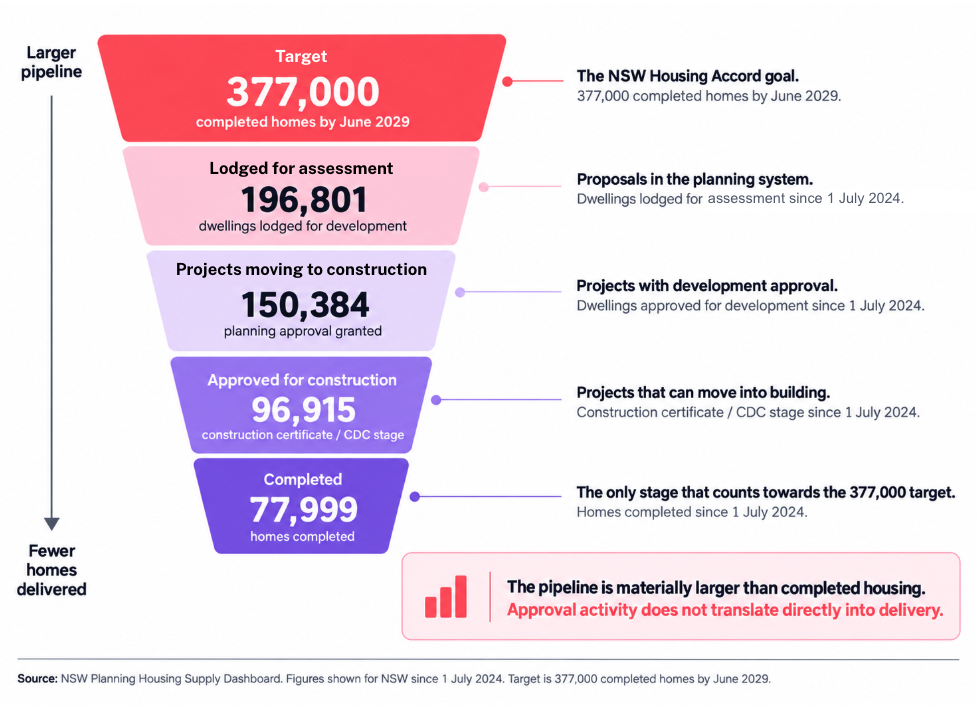
Figure 1. NSW housing delivery is behind target
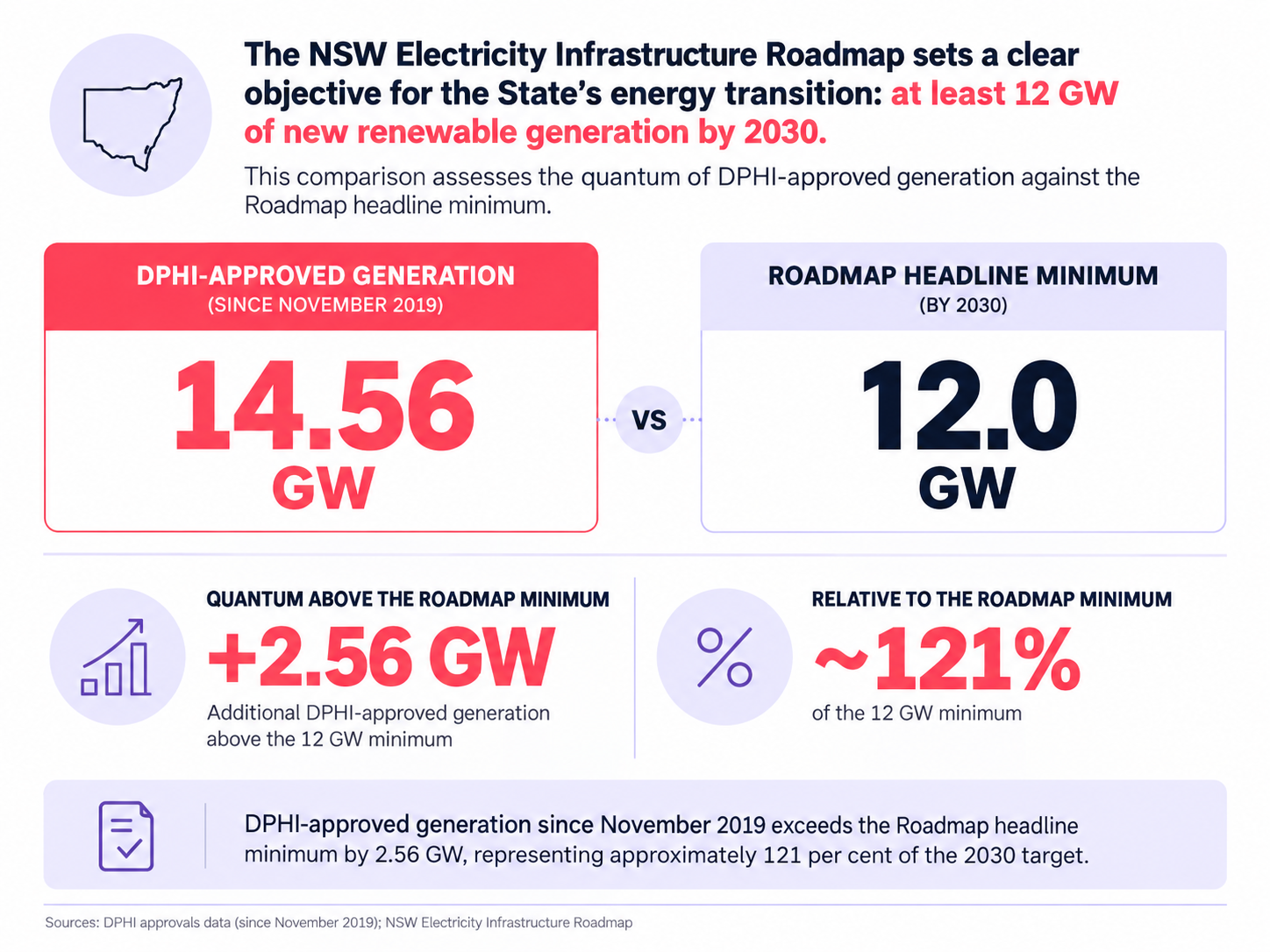
Figure 2. NSW energy pipeline
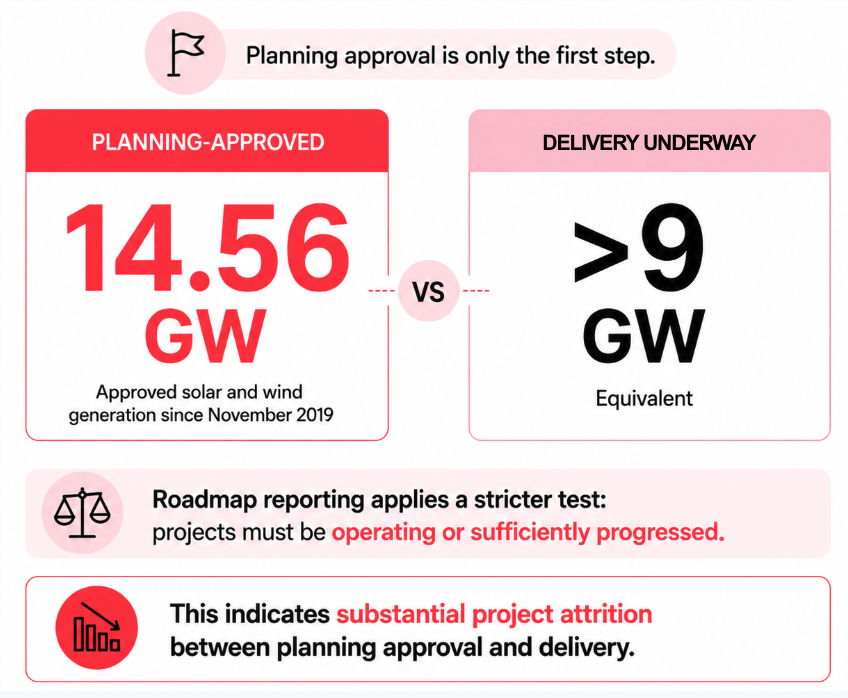
Figure 3. Planning approval does not mean it will actually be built
If the aim is to convert more approvals into delivered outcomes, coordination becomes essential. It is the mechanism that helps reduce delivery risk, align infrastructure, clarify responsibilities and give viable projects a clearer pathway to proceed.
Planning beyond assessment
Planning has traditionally focused on assessing impacts, managing competing interests and determining whether development should proceed. Those functions remain essential. But as housing, infrastructure and energy challenges become more complex, there is growing value in understanding what happens after approval and how the system supports delivery through to completion.
The profession’s contribution should not end once a consent is issued. Planning can help create the conditions for successful implementation by identifying delivery constraints earlier, distinguishing between project issues and system issues, and ensuring that approvals are connected to infrastructure sequencing, agency coordination, market feasibility and community outcomes.
Recent planning reform proposals, including the proposed Development Coordination Authority, recognise that fragmented agency advice is a real barrier to timely decisions. A single front door for state agency input could help reduce conflicting advice and improve consistency through the assessment process.
That coordination is important, but the delivery challenge extends beyond referral advice and assessment timeframes. Many of the constraints that stop projects moving from approval to commencement sit in infrastructure sequencing, funding responsibilities, local servicing, landowner behaviour, market feasibility, post approval requirements and cumulative impacts across places, sectors and agencies.
These issues are often experienced most acutely at the local level. Councils, landowners, utilities, communities and delivery partners all shape whether planned growth can be implemented in practice. A state level coordination model can help align agency advice, but it will need to connect with local infrastructure planning, local constraints and the commercial realities of delivery if it is to improve conversion.
Success should be measured by delivery: whether approved projects become homes, infrastructure and services that communities can actually use. The number of policies introduced, pathways created or approvals granted only tells part of the story. The stronger measure is how effectively projects move from approval to commencement, and from commencement to completion.
NSW already has many of the ingredients required to deliver growth, including policy settings, industry capability and sustained demand. What is missing is a system that consistently connects those elements in a way that supports feasible, coordinated delivery at scale.
Planners can no longer assume their role ends when land is rezoned or a DA is approved. The next task must be to help create the conditions for delivery, so approved projects can become the homes, infrastructure and energy projects our communities are desperately waiting for.
How we can help
An approval is an important milestone, but it is only one part of a deliverable project. The decisions made before an application is lodged, and the issues carried forward after consent, can have a greater bearing on whether a project proceeds.
Our advice is shaped by the stage of the project and the decisions that need to be made next. We help clients:
Set the direction for investment and development by testing opportunities, constraints, planning pathways and delivery scenarios before significant time and capital are committed.
Build and lead approval strategies that align project objectives, technical work, agency engagement and statutory requirements. Where a project encounters difficulty, we help identify practical tactics to resolve the issue and maintain progress.
Plan the infrastructure needed to enable delivery, including needs analysis, prioritisation, sequencing, funding approaches and coordination across projects, agencies and delivery partners.
Address social impacts and community outcomes through assessment, engagement, benefit sharing, development contributions and arrangements that are appropriate to the project and its local context.
Turn decisions into an implementation pathway by clarifying responsibilities, dependencies, governance and the work required between approval and commencement.
These issues rarely sit neatly within one discipline or one organisation. Briar brings planning, infrastructure and delivery considerations together so clients can make informed decisions, manage risk and create greater certainty as their projects move forward.
If your project is approaching a critical decision, facing an approval or delivery constraint, or needs a clearer path from concept to implementation, we’d love to have a conversation.